Is The Death Road Still Dangerous? Safety, Deaths And How Tours Manage The Risk (2026)
The Death Road once claimed hundreds of lives a year. This is what the danger looks like now, why it changed, and how a good operator keeps a bike descent inside sane limits.
Use the section recommendations as you read, then tailor the booking choice after the FAQs.
Figures from public records and reference sources for the North Yungas Road; the historic toll predates the 2006 highway.
Quick Booking Choice Compare the shared full-day descent with a private riding day, using actual inclusions and enough time for the return to La Paz.
Check Your Death Road Ride DateIs The Death Road Still Dangerous In 2026?
Yes, but far less than its name suggests. The old road that once recorded several hundred vehicle deaths a year now carries mostly guided cyclists, and serious and fatal cycling accidents remain possible. It remains a genuine adventure activity with real exposure: sheer 500 to 600 metre drops, loose gravel and no guardrails. An operator can provide equipment and support, but cannot make the ride risk-free or suitable for everyone.
The danger today is a different animal from the danger of the truck era. When freight and passenger buses fought for a single lane, the road earned its reputation as the world's most dangerous road. Now the through traffic is gone, and the main variable is how a rider behaves on a bike. That is a risk you can actually control, which is the whole point of this guide.
Two things are true at once, and honesty means holding both. The Death Road is safer than the headlines imply, and it is not risk-free. Anyone who tells you it is completely safe is selling something, and anyone who says it is a death sentence has not looked at how a modern guided ride runs. The realistic picture sits in between, and it leans heavily on who you ride with. For the ride experience itself, see how the guided ride works end to end.
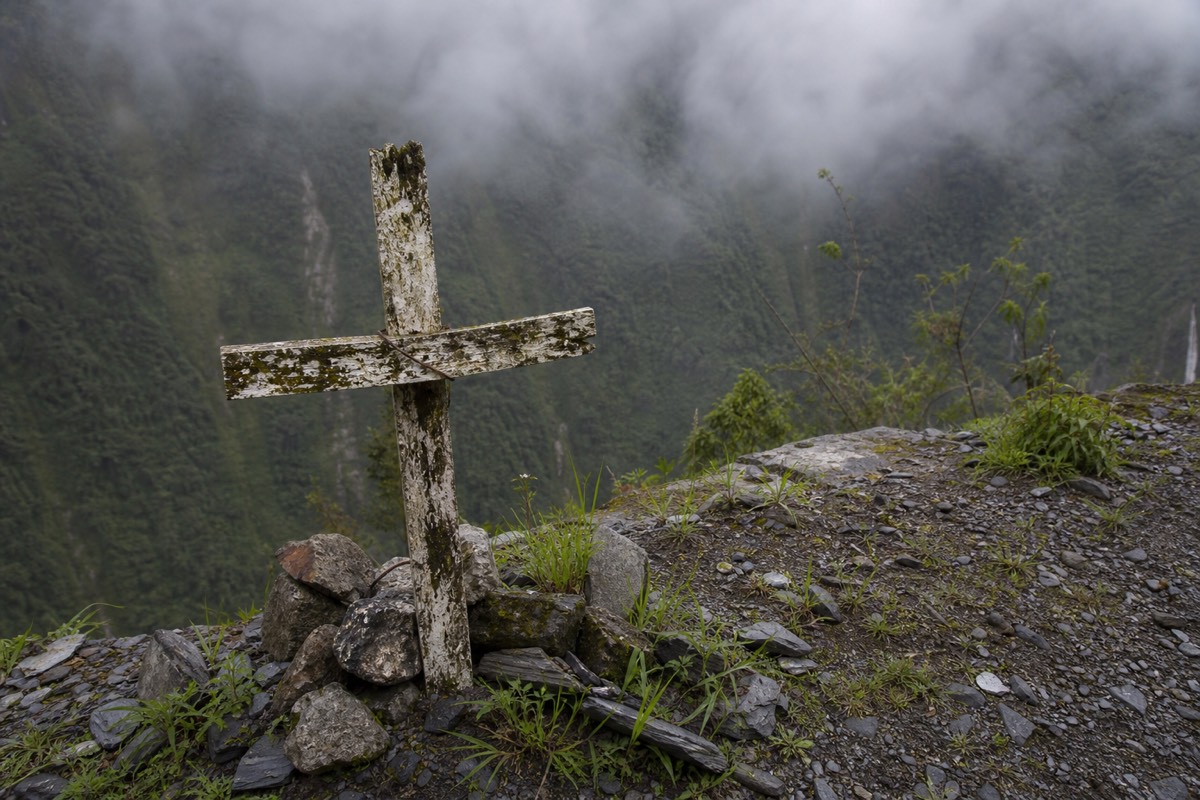
It helps to separate reputation from reality. The name, and the memorial crosses dotted along the road, come from an era when this was a working highway carrying everything from freight to school buses. That era was genuinely deadly. The version most travellers meet today is a quiet gravel descent used almost entirely by people on bikes with guides, and the gap between those two things is the single most misunderstood fact about the road. Keep it in mind as you read the history that follows, because the past and the present are not the same road in any way that matters to a rider.
| Aspect | Truck-route era | Cyclist era now |
|---|---|---|
| Main users | Trucks, buses, cars | Guided cyclists |
| Traffic | Heavy, two-way on one lane | Light, mostly bikes |
| Reported toll | Several hundred deaths a year | Current complete count not established here |
| Dominant danger | Head-on meetings on the edge | Cycling, equipment and environmental hazards |
| Turning point | Before 2006 | After the 2006 bypass |
Why Did The Death Road Kill Several Hundred People A Year?
The old North Yungas Road was a single track barely three metres wide in places, with 500 to 600 metre cliffs and no barriers. Two-way trucks and buses had to edge past each other over the drop, often in fog, rain and mud. In its worst decades the toll ran into the hundreds each year, and a single 1983 bus crash killed more than 100 people.
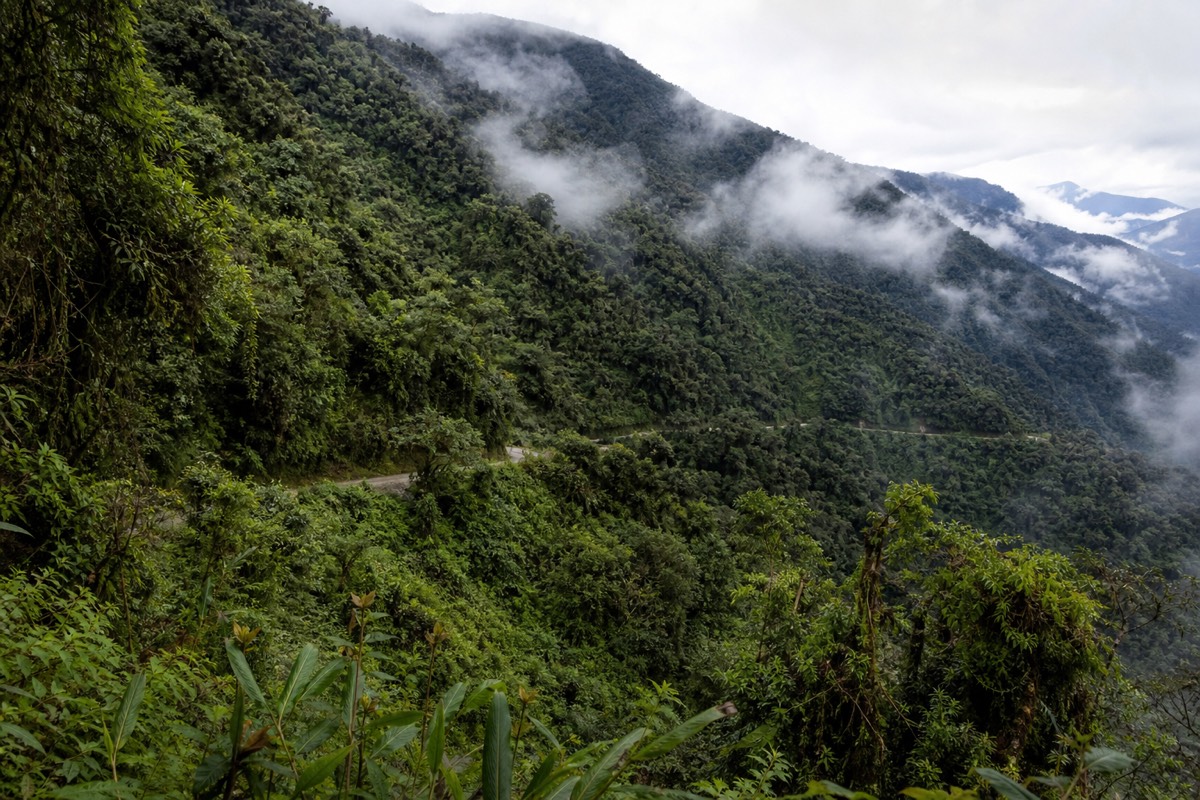
The width was the core problem. On a lane this narrow, two vehicles meeting head-on had to negotiate a pass with one of them inching backward toward open air. Bolivia even reversed the usual rule of the road here, sending vehicles down the left so the driver on the cliff side could lean out and judge the edge. Reference sources put the historic toll at 200 to 300 deaths a year, which made this stretch a byword for lethal roads across South America.
Weather multiplied every hazard. In the wet season, fog rolls up from the Yungas and cuts visibility to a few metres exactly where the margin for error is smallest. Rain turns the gravel to slick mud. Overloaded buses with tired brakes, top-heavy trucks, and long night drives did the rest. If you want the story behind the name in more depth, we cover how it earned the Death Road name separately.
The road was never built for the traffic it ended up carrying. It dates to the 1930s, cut into the mountainside by hand in an age before the engineering a modern cliff road would demand. For decades it was simply the only practical link between La Paz and the Yungas lowlands, so trucks, buses and cars used it because there was no alternative, not because it was safe. That mismatch, a heavy modern traffic load funnelled onto a narrow prewar track, is the root of the whole grim reputation. Nothing about the road forced the toll except the fact that too many vehicles had to share too little width over too big a drop.
| Factor | Effect |
|---|---|
| One-lane width, about 3 m | Oncoming vehicles had to edge past over a cliff |
| No guardrails, 500 to 600 m drops | Any slip off the edge was fatal |
| Fog, rain and mud in the wet season | Near-zero visibility on the exposed edge |
| Overloaded buses and trucks | Poor braking and top-heavy loads |
| Left-side driving rule | Helped judge the edge, still risky |
| 1983 bus accident | More than 100 people lost in one crash |
What Changed In 2006, And Did It Make The Road Safer?
A parallel highway opened in 2006, a wider, paved, two-lane route that took almost all through traffic off the old road. Freight and buses moved to the new bypass, and the original Death Road was left to local vehicles and a growing stream of tourist cyclists. Roughly 25,000 visitors a year now ride or visit it, and the collision risk that drove the old toll largely vanished.
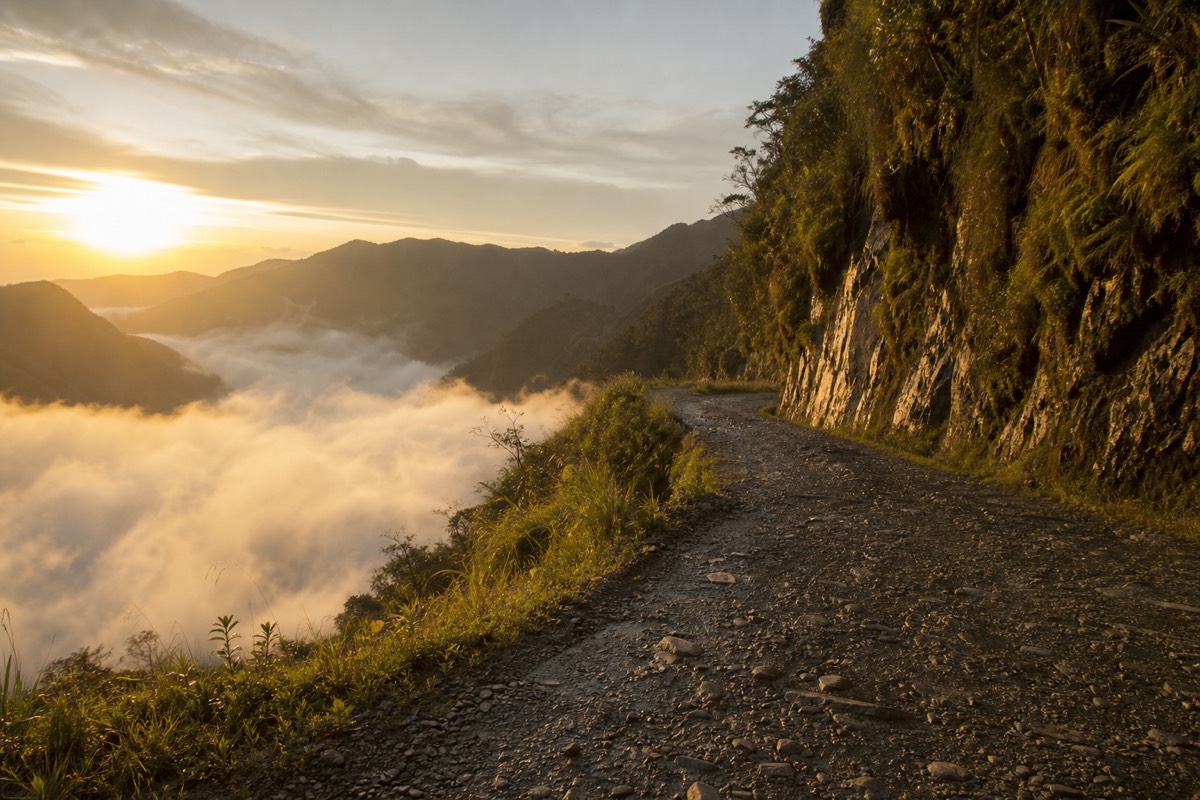
The bypass is the single most important safety change in the road's history. The deaths that made it famous came overwhelmingly from vehicles meeting on a lane too narrow to share. Remove the trucks and buses, and you reduce heavy-traffic exposure. What remains is a quiet gravel road with astonishing drops, used mostly by people who chose to be there on a bike. Whether any traffic still uses the old route is a common question, and we answer whether you can still drive the road in full.
None of that makes the exposure disappear. The cliffs are exactly as high as they always were, and a serious mistake still has serious consequences. The change is in the odds, not the geography. Because the modern risk is about individual riders rather than oncoming freight, it is a risk that a briefing, a guide and a support vehicle can shape, which the truck-era danger never allowed.
The distinction is easy to underrate if you only know the name. Take away the two-way freight and you remove the single mechanism that produced almost all of the deaths. A cyclist descending a quiet gravel road faces a completely different problem from a bus driver trying to pass an oncoming truck on a three metre ledge. The exposure is identical. The odds are not, and that gap is the reason a guided ride can be run responsibly on the very ground that once earned the road its name.
| Aspect | Before 2006 | After 2006 |
|---|---|---|
| Through traffic | All of it on the old road | Rerouted to the new highway |
| Vehicle volume on old road | High | Low, mostly local and tour vehicles |
| Primary user | Freight and passengers | Tourist cyclists, about 25,000 a year |
| Dominant risk | Vehicle collisions | Cycling, equipment and environmental hazards |
How Many Cyclists Die, And What Really Causes The Rare Accidents?
Cyclist fatalities on the Death Road are rare but real, with occasional deaths reported across the tourist-cycling era. Careful riders can also have serious accidents; a complete current cause breakdown is not established here. Potential hazards include excess speed on loose gravel, edging too close to the drop for a photo, worn or failing equipment, poor visibility in wet weather, and riding unguided with no support behind you.
Look at the pattern and a clear message emerges: the road can be hazardous even for cautious riders. Speed is one important controllable factor, because gravel gives far less grip than tarmac and a locked wheel near an edge is how a manageable slip becomes a fall. Photo stops are the second. People lean a bike toward the drop for the shot, lose their footing on loose stone, and get into trouble standing still. A good guide manages both by capping the pace and choosing where the group stops.
Equipment and conditions fill out the list. A cheap bike with fading brakes takes away your main tool exactly when you need it, and wet-season fog can hide the line ahead. The riders most exposed are the ones who skip a guide entirely to save money, because there is no one setting the pace, reading the road, or following with a vehicle when something goes wrong. That is the real argument for a vetted operator, which we make across every cost breakdown, including budget versus reputable operator pricing.
There is a quieter factor worth naming: overconfidence. The road feels tamer on the paved warm-up and the early gravel than it turns out to be at the narrow cliff sections, and a rider who has relaxed can carry too much speed into exactly the wrong corner. Good guides watch for this and rein the group in before the exposure ramps up. It is one more reason the human element, a guide who reads the group and knows the road, matters as much as the equipment strapped to the bike.
| Cause | How it happens | How a good day counters it |
|---|---|---|
| Excess speed | Riders outrun their brakes and skill on gravel | Briefing and guide cap the pace |
| Edge play for photos | Standing or leaning too near the drop | Set stops and guide positioning |
| Poor bike or brakes | Failure or fade mid-descent | Maintained bikes, disc brakes, spares |
| Wet, foggy conditions | Grip and sight both drop | Early start and season choice |
| Riding unguided | No support and no local knowledge | Support vehicle and experienced guide |
| Altitude and fatigue | Slower reactions high up | Acclimatising, pacing, food and water |
How Does A Reputable Operator Actually Reduce The Risk?
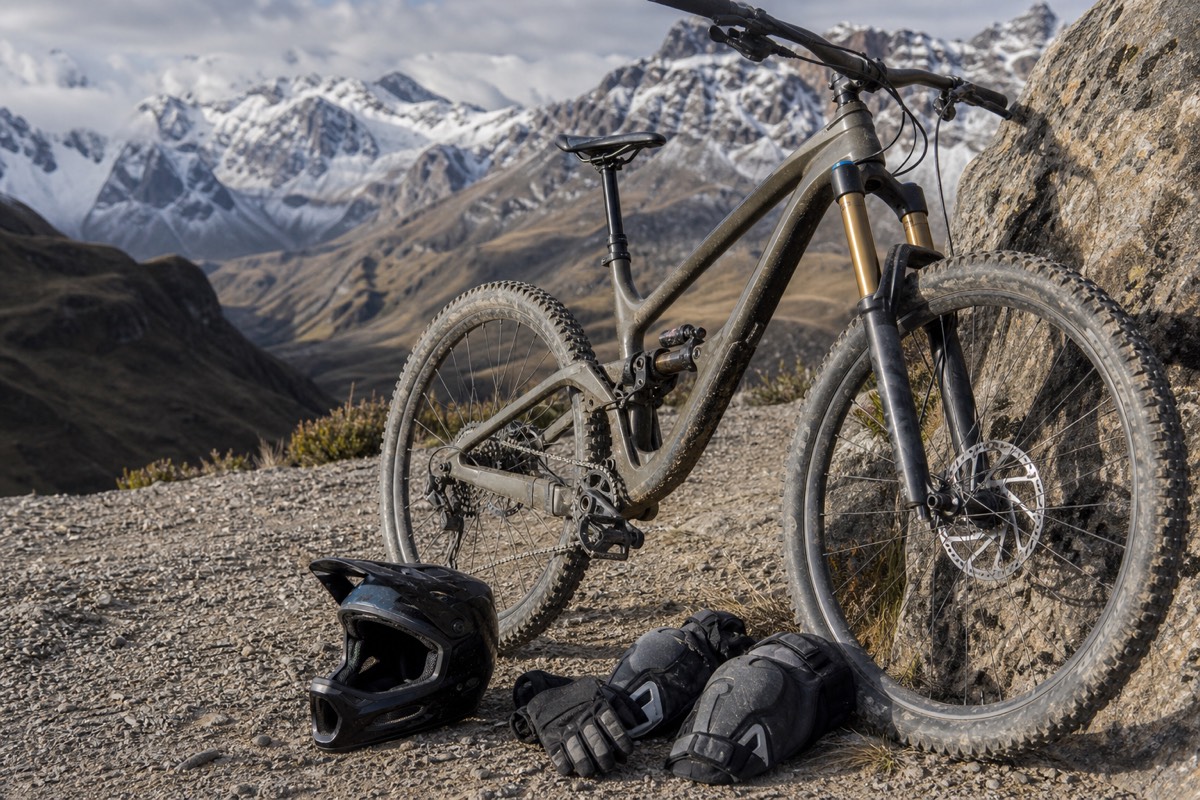
A good operator turns an exposed road into a managed activity through layers: a proper safety briefing, a fitted and mechanically checked bike, a guide riding out front who sets the pace, a support vehicle following behind with spares and a seat if you tap out, standard protective gear, and smart timing that puts the group below the cliffs before afternoon fog and rain arrive.
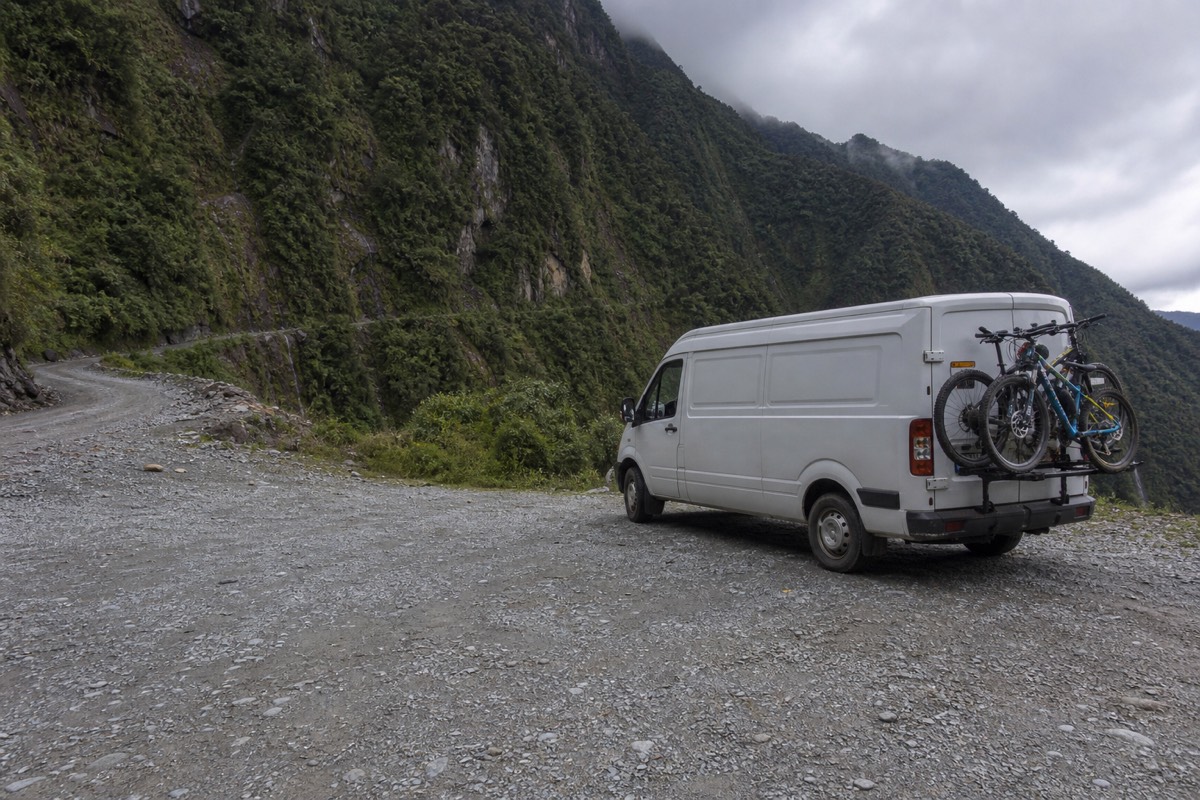
The briefing does more than tick a box. It teaches how to brake on gravel without locking up, how to sit on the bike through rough sections, and how far to stay from the edge at every stop. Following the briefing matters, but accidents can still happen. The bike check is just as practical: the right frame size, working brakes and decent tyres, confirmed before anyone rolls downhill.
Then there is the human and mechanical backup. A guide out front reads the road and holds the group to a sane speed. A support vehicle behind carries water, tools and spares, and can drive anyone who has had enough the rest of the way down. Season and time-of-day calls matter too: the dry months give firmer gravel and clearer views, which is why we map out riding in the dry season. Every ride we list at Death Road Bolivia Tours is built on that full stack of controls, not on bravado.
Timing is a safety tool that costs nothing. The reason a good operator drags you out of bed for a pre-dawn start is not tradition, it is weather. Descending the exposed sections in clear morning air, before the afternoon cloud climbs the valley, means better grip and much better sight lines at the points where both matter most. A shop that leaves late to suit a lie-in is quietly trading your visibility for convenience, and on this road visibility is not a luxury. The early alarm is part of the safety system, even though it never feels like it at 6:00 am.
| Layer | What it does |
|---|---|
| Pre-ride briefing | Teaches braking, body position and edge discipline |
| Bike fitting and check | Right size and working brakes before you roll |
| Guide out front | Sets a safe pace and reads the road |
| Support vehicle behind | Spares, water, and a ride out if you stop |
| Protective gear | Helmet, gloves and pads as standard |
| Season and timing calls | Descend before afternoon fog and rain |
| Waiver and insurance requirements | Check cover separately; a waiver is not insurance |
Budget Shop Or Reputable Operator: Where Is The Safety Gap?
Compare current quotes for the same date and party. The shared Gravity ride includes a maintained bike, protective gear, a guide, transport and meals; community fees and gratuities are extra. Private guiding has its own pricing, and a multi-day Uyuni itinerary is a different purchase with different transport and lodging. Do not use a headline price as proof of safety.
Cheaper is not automatically reckless, and plenty of mid-range shops run fine. The problem is that you often cannot tell from the street which corner has been cut. The brakes on a well-worn rental look the same as good ones until they fade halfway down. A guide who has ridden the road a thousand times and one on their second week both wear the same jacket. Use specific answers about equipment and support, rather than price as a safety score.
The clearest tell is the support vehicle. Ask any operator, in plain terms, whether a vehicle follows the whole group the entire way down, and what happens if a rider wants to stop. A confident yes, with a specific answer, is the single best signal you are dealing with a serious outfit. A vague response, or an admission that you are on your own once you set off, tells you exactly where the low price came from. That one question sorts most of the market faster than any review score.
| Option | What To Compare |
|---|---|
| Shared Gravity ride | 13½ hours; adults 18+; central meeting point; community fees extra |
| Private bike day | 12 hours; dedicated guide; ages 10–70 and listed height/weight limits; confirm pickup |
| Longer Uyuni itinerary | Four-day bike/Uyuni bundle ends in Chile; five-day Uyuni round trip excludes the bike day |
Risk By Factor: What Raises Or Lowers Your Odds On The Day?
Your real risk on the Death Road is not fixed, it moves with a handful of choices. Speed, operator quality, bike condition, weather, your own nerves and your behaviour at photo stops each push the odds up or down. Ride braked and calm with a vetted operator on a maintained bike in the dry season, stay back from the edge, and you take useful precautions without establishing a measurable personal risk rate.
Speed is one important factor you can control. The road does not force anyone to go fast. The second is the operator, because everything from the bike to the support vehicle flows from that one booking decision. Weather is partly luck and partly planning, which is why season choice matters, and why nervous riders often prefer the private Death Road ride where an exclusive guide can coach the pace corner by corner.
Altitude and fatigue sit quietly in the background. You start near 4,700 metres, where reactions and judgement dull if you have not adjusted, so the way you handle the altitude in La Paz feeds straight into how sharp you are on the bike. Sort the acclimatisation, respect the briefing, and the day's biggest risks are the ones you were always in charge of.
Nerves are a factor people underrate in themselves. A rider who tenses up and grabs the brakes on a loose surface is more likely to slide than one who stays relaxed and brakes smoothly, so calm is a genuine safety asset, not just a nicer way to ride. This is where a clear briefing and, for anxious riders, a private guide earn their place. Talking someone through the exposed sections keeps them loose exactly when tension would work against them, and relaxed control and maintained equipment help, but do not remove the road’s risks.
| Factor | Raises risk | Lowers risk |
|---|---|---|
| Speed | Fast, showing off | Controlled and braked |
| Operator | Cheapest shop, no support car | Vetted operator with a support vehicle |
| Bike | Worn brakes, wrong size | Maintained, disc brakes |
| Weather | Wet-season fog and mud | Dry-season firm gravel |
| Nerves and experience | Panic braking, first ride | Briefing followed, calm pace |
| Behaviour at stops | Edge photos | Stay back from the drop |
So Is The Death Road Safe For You? An Honest Verdict.
For most reasonably fit, sensible adults, a guided Death Road descent with a reputable operator is a manageable adventure, not a reckless stunt. You should reconsider if you panic on a bike, have a heart condition or serious untreated altitude sickness, or a severe fear of heights that would make the cliffs miserable rather than thrilling. It is a real risk, chosen and managed, not a guaranteed one.
The verdict comes down to two questions. Will you ride within your limits and follow the guide, and will you book someone whose bikes and support you can trust? Both deserve a clear answer before you consider riding. Answer no to either and you are stacking the deck against yourself on a road that does not forgive it.
Perspective matters here too. Adventure activities carry risk by definition, and the honest comparison is not against staying home, it is against the other things travellers happily do: diving on a reef, skiing off the groomed runs, riding a motorbike through an unfamiliar city. Done sensibly with a good operator, a Death Road descent sits comfortably in that company. Serious injuries can happen even with a guide. We do not have a verified dataset that ranks injuries by guided versus independent riding.
Context helps too. Plenty of travellers weigh this against general worries about the country, so we address safety in La Paz for tourists and whether this really is the deadliest road on Earth in their own pages. The Death Road is a serious thing done carefully by tens of thousands of people a year. Ride it that way and it belongs firmly in the category of a great adventure rather than a gamble. If you are ready, our guided Death Road tours from La Paz are the sensible way to do it.
Altitude note: gradual acclimatization matters. Avoid heavy exercise in the first 48 hours at altitude. Do not go higher with persistent symptoms; worsening illness needs medical advice, and breathlessness at rest, confusion or loss of coordination requires urgent help and descent. Downhill cycling and a private guide do not remove these risks.