Can You Still Drive On The Death Road?
The old road never closed. It just lost its traffic. Here is who still drives it, and why doing it yourself is rarely a good idea.
Use the section recommendations as you read, then tailor the booking choice after the FAQs.
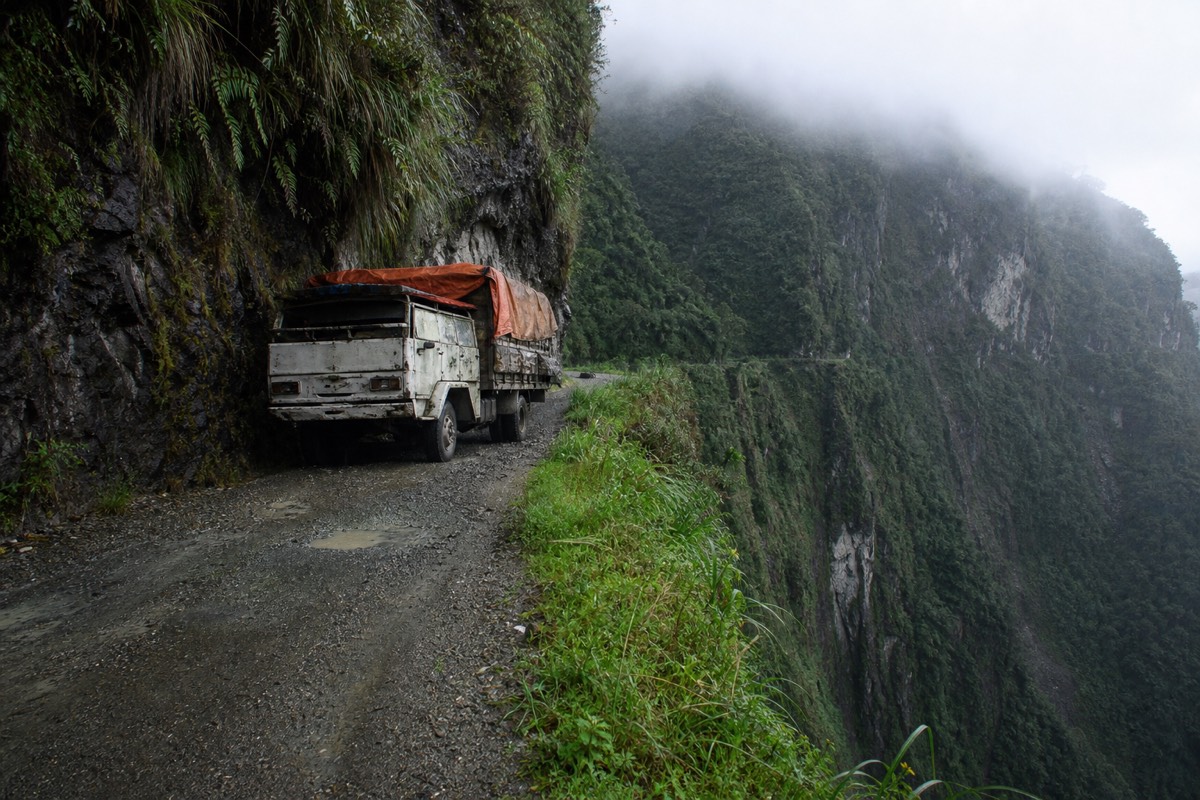
Yes, you can. The old Death Road never closed, and local vehicles, tour support vans and a trickle of traffic still use it. But since a modern highway opened in 2006, almost all through-traffic between La Paz and Coroico takes the new road. Driving the old route yourself is possible, and for most visitors it is not wise.
The road today is a different place from the deadly highway that named it. With the buses and freight gone, it is quiet, narrow and mostly given over to cyclists. You can put a vehicle on it, but the interesting questions are who does, and whether you should.
Quick Booking Choice The old road still carries vehicles. For visitors considering cycling instead, compare the guided bike day and private riding option.
Check Your Death Road Ride DateIs The Death Road Still Open To Vehicles?
It is open. The North Yungas Road remains a public route, and vehicles still travel it, mostly locals living in villages along the descent and the support vans that follow bike tours. The 2006 highway carries the buses and trucks, so the old road sees a fraction of its former traffic.
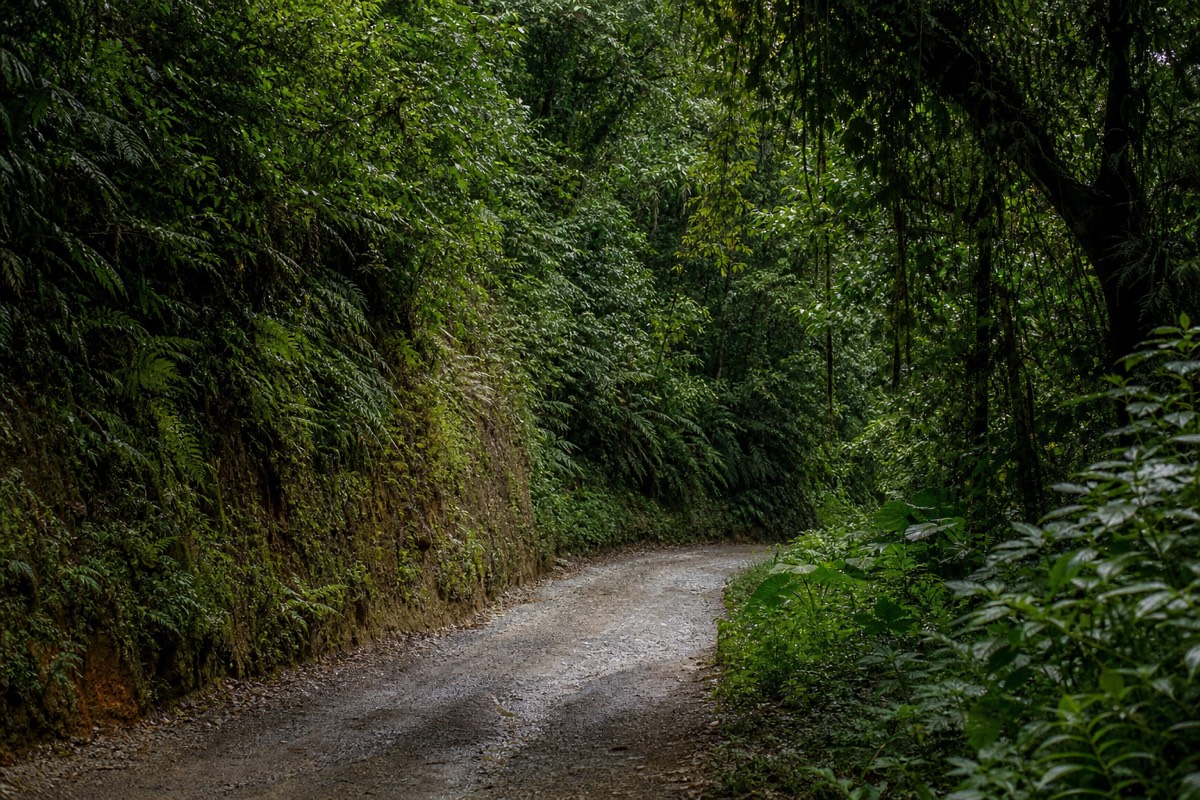
What changed was volume, not access. Before 2006 this was the only real link between the highlands and the Yungas, so everything crowded onto it. Now the paved highway handles that load, which helped it develop into a tourist cycling route. The history of the North Yungas Road tracks that shift, and why the route survives mainly for tourism today.
Current access can change with weather, road work or local restrictions; do not assume unrestricted access on your travel date. Early mornings, though, effectively belong to the bikes. Operators time descents to beat the afternoon fog that once caused so many crashes, and for a few hours the road fills with riders instead of freight.
Who Still Drives The Death Road, And Why?
Three groups, mostly. Residents of Yungas villages who use it for daily access; tour support vehicles that shadow each cycling group; and the occasional 4x4 or motorbike traveller drawn by the road's name. It is no longer a busy commuting route, so on a given morning most of the vehicles you meet belong to bike tours.
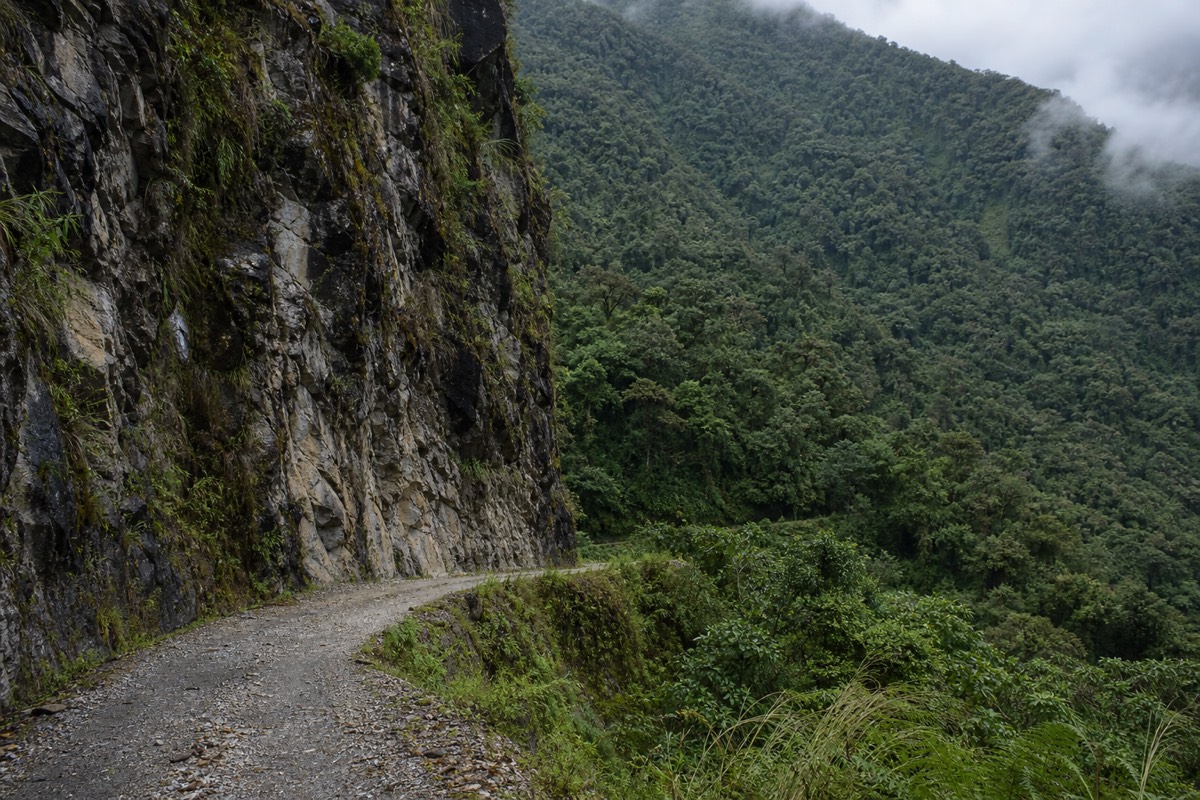
The support vehicles are the ones you will actually see. Every reputable operator runs a van behind the riders to carry bags, spare parts, water and anyone who wants a break from the saddle. That van is a safety feature, not a shuttle, and it is a good reason to book a guided day rather than tackle the road alone. You can read how the standard full-day group ride and the private Death Road ride both run this way.
For the villages strung along the descent, the old road is still a lifeline. Coffee, coca and fruit growers use it to reach market, and small trucks and shared taxis serve the hamlets the new highway bypasses. Meet one of these grinding uphill on a blind bend and you understand at once why the road still commands respect, even with the heavy traffic long gone.
Should You Drive The Death Road Yourself?
Generally, no. Self-driving a rental down the old road puts you on a narrow gravel shelf with 500 to 600 metre drops, no guardrails and no support if something goes wrong. Unless you are an experienced mountain driver with the right vehicle and local knowledge, the risk far outweighs the novelty.
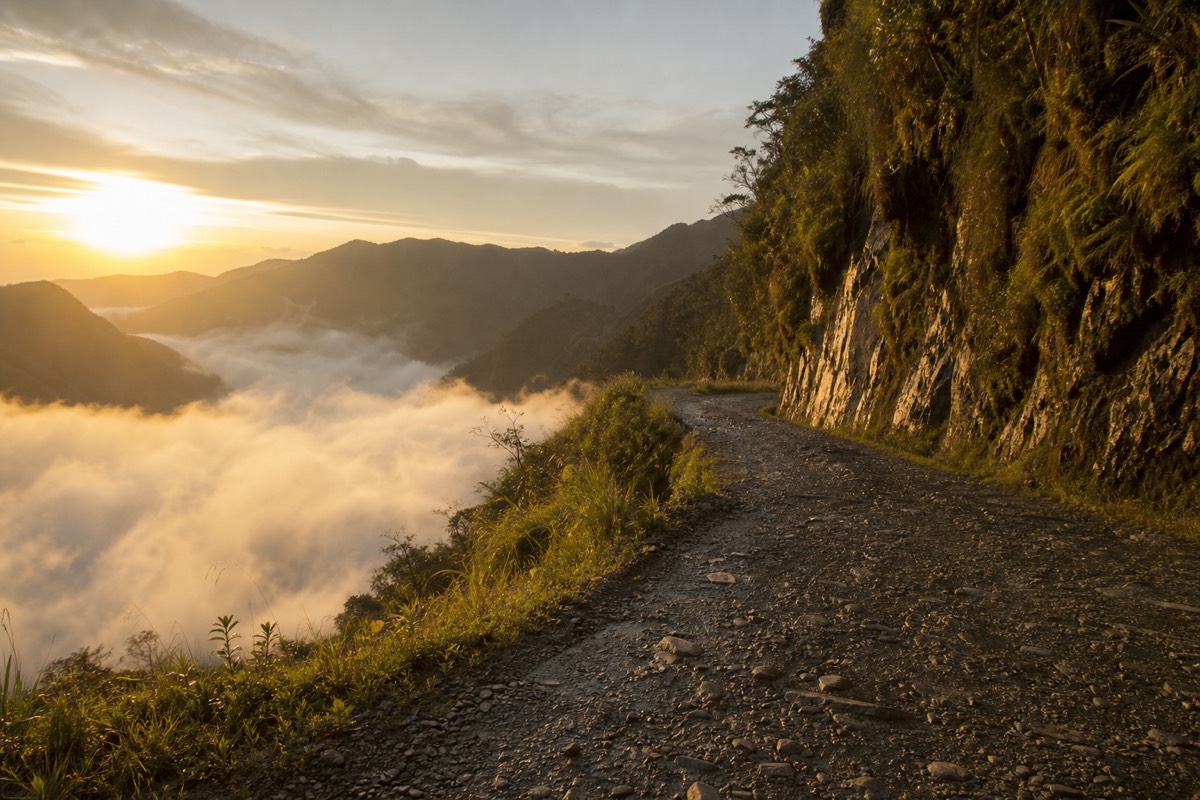
The road that news outlets long called the world's most dangerous road is unforgiving of a wrong line or a locked wheel. Fog can close in fast, the surface loosens in the wet, and a breakdown in the wrong spot leaves you stranded above a cliff. Rental agreements often exclude the route for good reason. If your goal is the scenery and the thrill, cycling offers a different way to experience it and a guide reads the road for you. For getting to the start at all, our guide to getting to La Cumbre from La Paz covers the logistics.
Cyclists also have an advantage a driver lacks: speed you can shed. A bicycle’s stopping distance depends on speed, surface, brakes and rider control, tuck against the inside wall, and let an oncoming vehicle squeeze past. A car committed to a narrow line has far fewer options, and reversing along a cliff edge to make room is exactly the kind of moment that built this road's reputation. That difference in control, more than anything else, is why the guided day is built around bikes.
Driving Versus Biking The Death Road
Most visitors who want to experience the road choose the bike, and for sound reasons. A bicycle travels slowly, keeps you fully in control of your own line, and comes with a guide and a support vehicle when you book a tour. Driving needs a separate assessment of vehicle, access, weather and mountain-driving experience; we do not have comparable current risk rates for driving and cycling.
| Guided bike ride | Self-driving | |
|---|---|---|
| Speed | Slow, fully under your control | Faster, harder to correct in time |
| Support | Guide plus a following support vehicle | None; you are on your own |
| Local knowledge | Guide reads the road and weather | Down to you and a map |
| Overall risk for a newcomer | Different hazards; no verified comparative rate | High, and often not insured |
That is why the day is built around cycling. Every ride we list at Death Road Bolivia Tours puts a guide in front and a support van behind, so you get the road without carrying the whole risk yourself. If you are still weighing the trip, see whether the ride is worth doing, and if you would rather add more to it, look at the four-day Death Road and Uyuni trip ending in Chile.