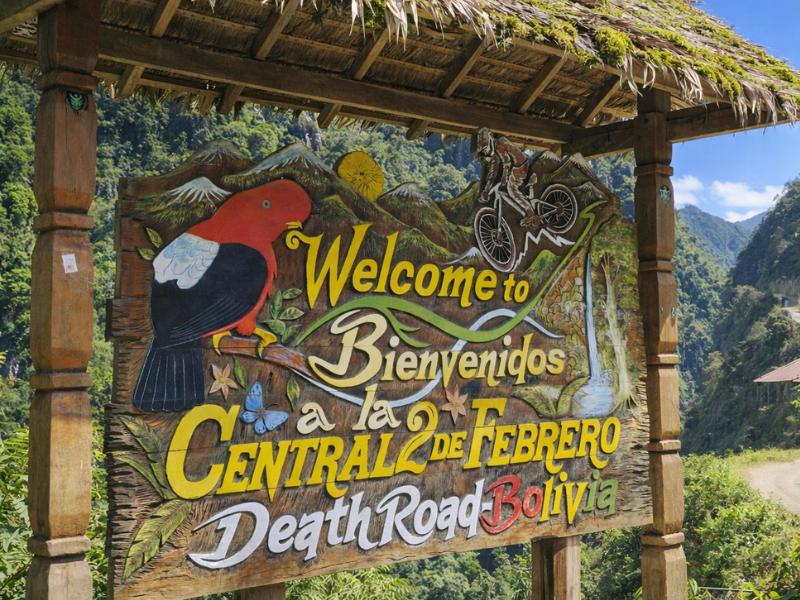
Best Mountain Biking Adventures La Paz. Experience the World’s Most Dangerous Road with Expert Local Guides
Book the best Death Road Bolivia tours from La Paz. Cycle the infamous Yungas Road (North Yungas Road) with full safety briefing, quality mountain bikes, helmets and experienced guides. Enjoy stunning Andean scenery, waterfalls and adrenaline-pumping descents on small-group or private full-day adventures. Shuttle service and hotel pickup included. Secure your unforgettable Death Road experience today!
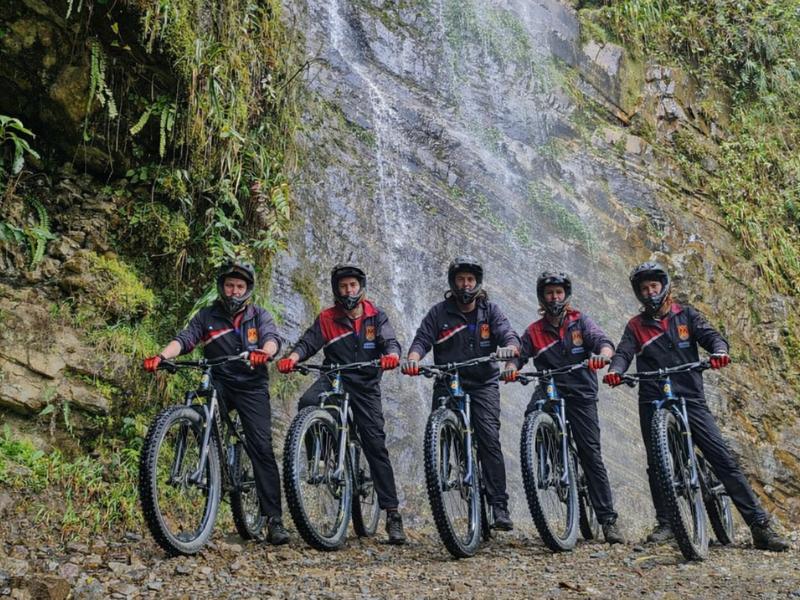
Our best-selling Death Road Bolivia tours take you down the infamous Yungas Road by mountain bike — descending from high Andean passes through misty cloud forest to the jungle below.
Conquer the infamous “World’s Most Dangerous Road” on this thrilling mountain bike adventure from La Paz. Ride 40 miles downhill along a narrow, winding mountain road with dramatic drops, descending from snowy Andean peaks into lush Amazon jungle.
Experience the infamous “World’s Most Dangerous Road” on this private full-day mountain bike adventure. Ride from the high Andean mountains at 4,650m down to the lush subtropical Yungas rainforest at 1,200m — a thrilling 40-mile descent along a narrow, winding road with dramatic drops.
Combine two of Bolivia’s most iconic experiences in one unforgettable trip. Сonquer the thrilling Death Road by mountain bike, descending through dramatic Andean scenery, waterfalls, and lush Yungas rainforest. Then fly or drive to the Uyuni Salt Flat for a spectacular 3-day, 2-night adventure. Explore the vast white salt desert with its surreal reflections, visit Incahuasi Island, colorful lagoons with flamingos, deserts, and semi-active volcanoes.
Why Death Road Bolivia is a Must-Visit Destination
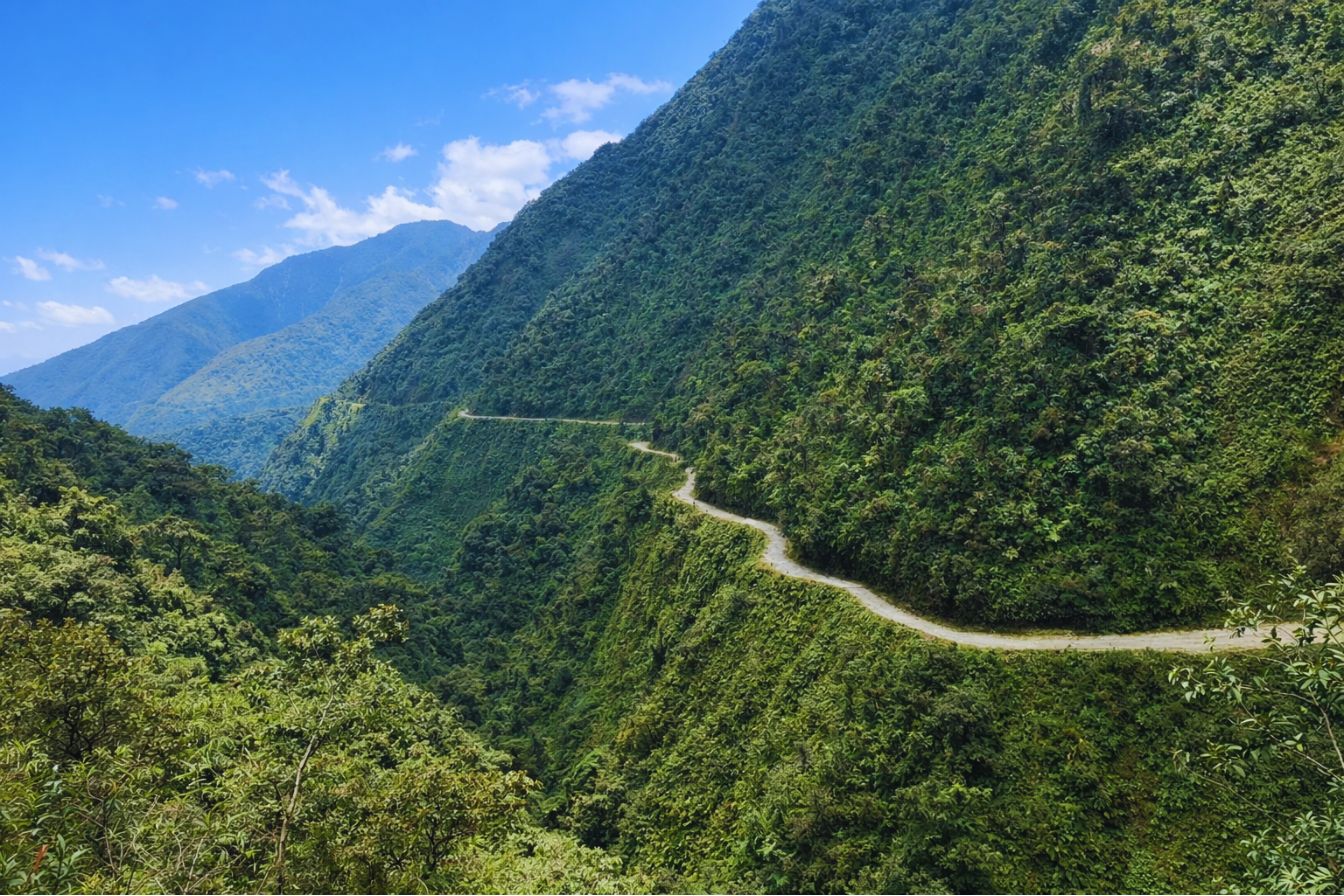
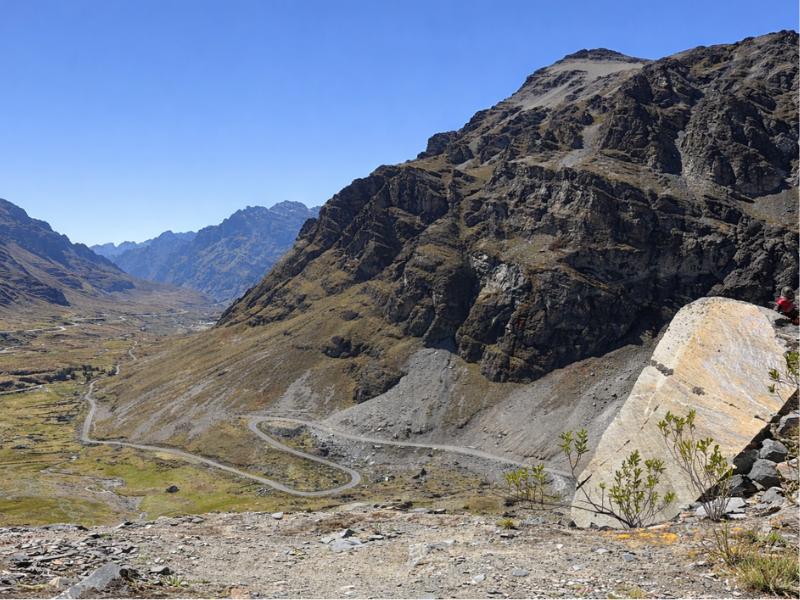
Just outside La Paz, Death Road (North Yungas Road) is one of the most thrilling and famous mountain bike descents in the world. Starting at over 4,700 meters in the freezing Andes, you drop more than 3,500 meters through dramatic scenery — from icy mountain passes with thin air down into lush subtropical jungle filled with waterfalls, monkeys, and parrots. The narrow gravel road clings to sheer cliffs with thousand-meter drop-offs, adrenaline-pumping turns, and breathtaking views the entire way. With Death Road Bolivia Tours, you’ll ride with experienced local guides, get top-quality bikes and safety gear, enjoy a support vehicle, and finish the day with a well-earned beer and swim in a jungle waterfall — all while staying safe on one of the planet’s most legendary rides.
Our expert team has been helping navigate and book Death Road Bolivia tours and activities for tourists from all over the world for over a decade, ensuring you have a hassle-free trip with everything booked in advance.
With deep knowledge of the infamous Yungas Road, Bolivia’s dramatic mountain terrain, and adrenaline-packed cycling experiences, partnerships with the best local operators and safety-focused guides, and a passion for creating unforgettable experiences, we're committed to making your Death Road adventure truly extraordinary. From your first inquiry to your last tour, we're here to support you every step of the way.
Award-Winning Travel Experience
Death Road Bolivia Tours is recognized by leading travel platforms worldwide
Death Road (officially known as the North Yungas Road) starts about 60–70 km (37–43 miles) northeast of La Paz, near the town of La Cumbre (the official starting point at around 4,700 m / 15,400 ft).
Here’s how most people reach Death Road from La Paz:
1. Organized Death Road Tour (Recommended & Most Common)
Almost all visitors go with a guided tour operator from La Paz.
The tour company picks you up from your hotel in La Paz (usually between 6:30–8:00 AM).
They provide transport (minibus or 4x4) to the starting point at La Cumbre / Death Road.
Time: 1.5 – 2 hours drive from La Paz to the top of Death Road.
After the bike descent, they bring you back to La Paz (usually arriving between 5:00–8:00 PM).
This is by far the easiest, safest, and most popular way. You don’t need to arrange any transport yourself.
2. Independent / Self-drive
Possible but not recommended for most people.
You would need to take a taxi or public transport to La Cumbre, rent a bike there, and arrange return transport — complicated, more dangerous, and more expensive.
Verdict The best and safest way is to book a guided Death Road tour from La Paz. The operator handles all transportation from your hotel to the starting point and back. You only need to show up at your hotel lobby at the pickup time.
You can book highly rated Death Road tours from La Paz (with hotel pickup, professional guides, quality bikes, safety briefing, and return transport) at Death Road Bolivia Tours.
How long is the drive from La Paz to the start of Death Road?
The drive from La Paz to the official starting point of Death Road (La Cumbre pass) takes approximately 1.5 to 2 hours.
Key details:
Distance: About 60–70 km (37–43 miles) northeast of La Paz.
Starting elevation: La Cumbre is at around 4,700 m (15,400 ft).
Road conditions: The first part is on a good paved road (new Yungas Road), then a short section on the old road to reach the actual beginning of the famous Death Road descent.
Most guided tours depart La Paz between 6:30 AM and 8:00 AM to reach the top in good time for the safety briefing and to start biking while the weather is still clear.
Verdict Expect a 1.5 to 2-hour drive from La Paz to the start of Death Road. This is included in all standard guided tours, with hotel pickup in La Paz.
You can book highly rated Death Road tours from La Paz (with hotel pickup, transport to the starting point, professional guides, quality bikes, and safety equipment) at /.
Is a guided tour mandatory for Death Road Bolivia?
You are allowed to ride or drive Death Road independently. However, a guided tour is strongly recommended for safety reasons, and the vast majority of travelers choose to go with an organized tour.
Why most people still join a guided tour:
Safety — Death Road has very steep drop-offs (often 500–600+ meters / 1,600–2,000 ft with no guardrails), narrow sections, and unpredictable weather. Experienced local guides know the road conditions, weather risks, and safest riding lines.
Logistics — Transport from La Paz to the starting point (La Cumbre, 4,700 m), bike rental, helmets, gloves, protective gear, lunch, and return transport to La Paz are all arranged for you.
Support — Guides carry basic first-aid, radios, and spare parts. In case of accident or mechanical issues, they can assist quickly.
Insurance — Most tour companies provide basic accident insurance (check the details when booking).
Independent option:
Possible but not recommended for first-timers. You would need to arrange your own transport to La Cumbre, rent a bike on-site (quality varies), and handle your own return — which is more complicated, risky, and often more expensive.
Verdict While not legally required, a guided tour is highly recommended for safety, convenience, and peace of mind. Most travelers (including experienced cyclists) choose a guided tour for Death Road Bolivia.
You can book highly rated guided Death Road tours from La Paz (with hotel pickup, professional guides, quality bikes, safety equipment, and return transport) at Death Road Bolivia Tours.
How does a typical Death Road bike tour work?
Here’s a clear and realistic overview of how a typical Death Road bike tour from La Paz works in 2025–2026:
Standard Full-Day Itinerary (most common format)
Hotel Pickup in La Paz (6:30 – 8:00 AM) Your guide and driver pick you up from your hotel in a minibus or 4x4.
Drive to the Starting Point (La Cumbre) (~1.5 – 2 hours) You climb up to La Cumbre pass at approximately 4,700 m (15,400 ft). Here you get a safety briefing, sign waivers, and are fitted with helmets, gloves, and protective gear.
The Bike Descent – Death Road (3 – 4 hours riding)
Total distance: ~40–50 km (25–31 miles) of mostly downhill riding.
You start on the new paved road for the first section (safer and less steep).
Then you switch to the famous old Death Road (narrow, unpaved, with sheer drop-offs).
The road is mostly downhill with some short uphill sections.
You ride at your own pace, with guides and support vehicle following.
Stops along the way
Photo stops at the most scenic and famous sections.
Water and snack breaks.
A stop for lunch (usually included — simple Bolivian meal like chicken, rice, and salad).
Arrival at the bottom (Yolosa or Coroico area) (~1,200 m / 3,900 ft) You finish in the warmer Yungas jungle area. Here you usually have time to relax, swim in a pool, or have a cold drink.
Return to La Paz (2.5 – 3.5 hours) The group is driven back to La Paz, usually arriving between 5:00 PM and 8:00 PM.
Verdict A typical Death Road bike tour is a full-day adventure (10–12 hours total) that includes transport, safety briefing, guided downhill biking, lunch, and return to La Paz. It is well-organized and suitable for beginners to intermediate cyclists.
You can book highly rated Death Road bike tours from La Paz (with hotel pickup, professional guides, quality bikes, and full support) at /.
Is Death Road still dangerous in 2026?
Yes, Death Road is still dangerous, but it is much less dangerous than it was 15–20 years ago.
Here’s the honest situation in 2026:
Current Reality:
The most dangerous original section (the narrow, single-lane dirt road with sheer 500–600+ meter drop-offs and no guardrails) is still there and is the part tourists ride.
However, since the new paved Yungas Road opened in 2006, most heavy traffic (trucks and buses) now uses the safer new route. This has dramatically reduced the number of accidents.
The majority of serious accidents in the past were caused by large vehicles. Today, the road is used mainly by bicyclists and a few local vehicles, which makes it significantly safer.
Current risk level for cyclists on guided tours:
Guided tours have a very good safety record in recent years.
Fatal accidents involving tourists on organized bike tours are now rare.
Most incidents are minor: scrapes, bruises, or broken bones from falls — usually due to rider error, wet conditions, or going too fast.
Main remaining dangers:
Sheer drop-offs with almost no guardrails on many sections.
Narrow road in places (barely wide enough for a bike + oncoming vehicle).
Loose gravel, rocks, and sudden blind corners.
Rapid weather changes (fog, rain, or strong wind can appear quickly).
High altitude at the start (4,700 m) can cause fatigue or altitude-related issues.
Verdict Death Road is still genuinely dangerous if you ride it independently or recklessly. However, when done with a reputable guided tour, with proper bikes, helmets, and experienced guides who control the group’s speed and stopping points, the risk is significantly reduced and considered acceptable by most adventure travelers.
Most people who do the tour with a good company describe it as thrilling but manageable, not terrifying.
You can book highly rated, safety-focused Death Road bike tours from La Paz (with hotel pickup, professional guides, quality bikes, and full support) at Death Road Bolivia Tours.
Always choose a well-reviewed operator with good bikes and safety records.
What safety measures are used on Death Road tours?
Reputable Death Road tours in 2025–2026 take safety very seriously. Here are the main safety measures you can expect on a good tour:
Professional guides and support vehicle Experienced local guides ride with the group the entire way. A support van follows behind (or drives ahead) carrying spare parts, tools, first-aid kits, extra water, and snacks.
High-quality equipment
Modern mountain bikes in good condition (regularly maintained).
Full-face or high-quality helmets (mandatory).
Gloves and basic protective gear (knee/elbow pads on some tours).
Well-maintained brakes and tires suited for gravel and steep descents.
Safety briefing A detailed briefing at the starting point (La Cumbre) covering riding technique, speed control, road conditions, what to do if you fall, and emergency signals.
Group management
Small groups (usually 8–15 people max).
Guides control the pace — they stop the group at dangerous sections and give clear instructions.
Riders are spaced out to avoid bunching up.
Medical and emergency preparedness
Guides carry first-aid kits and oxygen (for altitude issues at the start).
Many operators have satellite phones or radios for communication in areas with no mobile signal.
Basic travel insurance is often included or strongly recommended.
Road management
Tours avoid the busiest or most dangerous times of day.
They monitor weather conditions — tours may be postponed or modified in heavy rain or fog.
Verdict Good Death Road tours have solid safety measures in place, including experienced guides, quality bikes, support vehicles, and proper briefings. However, the road itself still has real dangers (steep drops, gravel, blind corners), so choosing a well-reviewed, safety-focused operator is very important.
You can book highly rated, safety-conscious Death Road tours from La Paz (with professional guides, quality bikes, support vehicle, and full safety briefing) at /.
Best time of day for Death Road tours?
The best time of day for Death Road tours is early morning, with departures from La Paz typically between 6:30 AM and 8:00 AM.
Why early morning is best:
Weather & visibility: The road is usually clearest and driest in the morning. Fog, rain, and strong winds are much more common in the afternoon.
Safety: Fewer vehicles on the road early in the day, and the group rides with better visibility and more daylight.
Temperature: It’s cooler at the high starting point (La Cumbre, 4,700 m) and more comfortable during the long descent.
Crowds: You avoid the larger groups that start later, so the road feels less busy.
Photos: Morning light is excellent for photos, especially at the famous viewpoints and on the descent.
Second-best option: Some tours offer a slightly later start (around 8:00–9:00 AM), which is still acceptable if you can’t make the earliest departure.
Times to avoid:
Afternoon starts — Not recommended. The descent can finish in the dark or in worsening weather (fog, rain, or slippery conditions), which significantly increases risk.
Verdict Book an early morning departure (ideally 6:30–8:00 AM) for the safest, most comfortable, and most enjoyable Death Road experience with the best conditions.
You can book highly rated Death Road tours from La Paz (with early-morning departures, professional guides, quality bikes, and full safety support) at Death Road Bolivia Tours.
Best month for Death Road Bolivia tours – dry or wet season?
The best month for Death Road Bolivia tours is during the dry season, specifically May to September, with June, July, and August being the most recommended months.
Why the dry season is better:
Road conditions: The gravel and dirt sections are much firmer and less slippery. In the wet season, the road can become muddy and extremely dangerous, increasing the risk of skidding and falls.
Weather: More stable, with less rain, fog, and strong winds. Visibility is better, which is important on a road with sheer drop-offs.
Safety: Significantly safer overall. Most serious accidents on Death Road historically happen during or right after heavy rain.
Experience: You can enjoy the views, take better photos, and ride more confidently without constantly worrying about slippery surfaces.
Quick comparison:
Season
Road Condition
Safety Level
Visibility
Recommendation
Dry (May–Sep)
Dry, firmer gravel
Much safer
Good to excellent
Best choice
Wet (Nov–Mar)
Muddy, slippery
Higher risk
Often poor
Not recommended
What should I pack for a Death Road bike tour?
For a Death Road bike tour from La Paz, you don’t need to bring a lot because the tour operator provides the bike, helmet, gloves, and basic protective gear. Focus on comfort, weather protection, and safety.
Here’s the recommended packing list:
Essential items:
Clothing (layered for big temperature change):
Lightweight long-sleeve shirt or base layer (moisture-wicking)
Fleece or light jacket (it’s cold at the start ~4,700 m)
Waterproof/windproof jacket (rain is possible even in dry season)
Comfortable long pants or quick-dry shorts (many people wear padded cycling shorts underneath)
Change of clothes for after the ride (you’ll be dusty/sweaty)
Footwear:
Sturdy closed-toe shoes with good grip (trainers or light hiking shoes work well). No flip-flops or sandals.
Sun & dust protection:
Sunglasses (essential — glare and dust at high altitude)
Buff or scarf (to cover mouth/nose from dust on the descent)
Sunscreen (SPF 50+) and lip balm with SPF
Other must-haves:
Small daypack or waist bag (for phone, cash, sunscreen, water)
Reusable water bottle (tours usually provide water)
Cash in small Bolivianos (for tips to guides ~50–100 BOB, snacks, or drinks at the bottom)
Phone + power bank (for photos and in case of emergency)
Optional but useful:
Padded cycling shorts (for comfort on the long descent)
Light gloves (if you prefer your own, though tours provide them)
Small towel or bandana
Motion sickness tablets (for the drive up to La Cumbre)
What the tour usually provides:
Mountain bike + helmet + gloves
Basic protective gear
Lunch and water
Support vehicle and guide
Verdict Pack light and focus on layers, sun/dust protection, and comfortable closed-toe shoes. The temperature drops dramatically from the cold, high-altitude start to the warm, humid bottom, so layering is key.
You can book highly rated Death Road bike tours from La Paz (with bike, helmet, gloves, lunch, support vehicle, and professional guides) at Death Road Bolivia Tours.
Is one day enough for Death Road or should I stay overnight in Coroico?
One day is enough for most people to do the Death Road (North Yungas Road) bike tour — and it is the most common way visitors experience it.
One-Day Death Road Tour (Standard & Most Popular)
Pickup from La Paz in the morning (6:30–8:00 AM)
Drive to La Cumbre (starting point at ~4,700 m)
Safety briefing and start biking down Death Road
Lunch at the bottom (Yolosa or near Coroico)
Swim in a pool or relax briefly
Return drive to La Paz (usually arriving between 5:00–8:00 PM)
Pros of one day:
Convenient and efficient
No need to pack overnight clothes
Cheaper than adding an overnight
Still gives you the full thrill of the descent and the famous views
Cons of one day:
Quite long and tiring (10–12+ hours total, including driving)
Limited time to enjoy the warmer Yungas jungle climate at the bottom
You miss the relaxed evening and morning in Coroico
Staying overnight in Coroico (Recommended if you have time)
Many people choose to spend one night in Coroico (the small jungle town at the bottom of Death Road) because:
You finish the ride with more time to relax, swim, and enjoy the tropical setting.
You can explore Coroico the next morning (waterfalls, coffee plantations, zip-lining, or just chilling with great views).
The return to La Paz the next day is more relaxed.
Verdict
One day is perfectly fine and sufficient for the main Death Road experience — most visitors do it this way and are happy.
One night in Coroico is better if you want a more relaxed, enjoyable trip and want to experience the contrast between the cold highlands and the warm Yungas jungle.
If your schedule allows, staying overnight in Coroico makes the whole adventure more pleasant and memorable.
You can book highly rated Death Road tours from La Paz (with the option to add an overnight in Coroico) at /.
A Typical Tour Day on Death Road
One full day in the park, hour by hour, the way the guided tours actually run it.
7:00 amHotel pickup in La Paz, minibus departs
8:30 amArrive La Cumbre pass, 4,700 meters
8:45 amSafety briefing, bike fitting, gear check
9:15 amDescent begins on the new paved road
10:00 amTransition to the old Death Road, gravel surface
10:30 amFirst major cliff section, first photo stop
11:30 amMid-route stop, waterfall views, snacks
12:30 pmLower Yungas section, jungle begins
1:00 pmArrive at the bottom, Yolosa area, 1,200 meters
1:30 pmLunch at the jungle finish point, cold drinks
2:30 pmOptional waterfall swim
3:30 pmLoad bikes, board minibus for return
6:00 pmArrive back in La Paz
The North Yungas Road descends 3,500 meters over 64 kilometers, from the cold, thin air of the La Cumbre pass above La Paz to the warm subtropical jungle of the Yungas valley below. The road was cut into the cliffs of the Cordillera in the 1930s by Paraguayan prisoners of war and served for decades as the main supply route between La Paz and the lowland Amazon regions, a single-lane track along sheer cliff faces with no barriers and regular fatalities from vehicles sliding off the edge. The Inter-American Development Bank named it the world’s most dangerous road in 1995, which produced the specific outcome of making it one of the most sought-after cycling experiences on earth. Death Road Bolivia Tours has been running this descent long enough that the safety protocols are thorough and the guides read the road in detail rather than simply accompanying clients down it.
La Cumbre at 4,700 meters is cold, often cloudy, and routinely produces the physiological effects of altitude on clients who arrived in La Paz the night before and have not had time to acclimatize. The guides assess the group at the briefing and know the signs of altitude affecting someone before that person knows it themselves. The safety briefing covers brake technique, sight lines around the cliff-side corners where the road narrows to three meters with a vertical drop on one side, the spacing protocol between riders to maintain stopping distance, and the role of the support vehicle that follows the group throughout the descent. Every rider signs a waiver and every client is fitted with a helmet, gloves, knee and elbow pads before the first turn of the pedals.
Here is what we tell clients honestly before the Death Road day: it is a mountain biking experience that requires no technical skill but rewards basic competence with a bicycle and the capacity to apply brakes smoothly on loose gravel. The majority of the descent is straightforward controlled riding with the scenery as the primary demand on attention. The sections with genuine exposure, the famous cliff-edge stretches where the drop is 500 to 600 meters and the road surface is uneven gravel, require focus and the willingness to slow down when concentration demands it. Clients who approach these sections at the speed the scenery invites rather than the speed the conditions allow are the ones who get into difficulty. The guides are positioned at the significant sections precisely to moderate pace and catch errors before they become problems. The Death Road has seen over 300 fatalities since records began, almost all involving vehicles. In the current era of guided cycling tours with quality bikes and full safety protocols, the road is dangerous in the way that any serious mountain activity is dangerous: manageable with proper preparation and honest with consequences when preparation fails.
The ecological transition across the descent is the feature that consistently surprises clients who came expecting only adrenaline. At La Cumbre the landscape is high Andean moorland, treeless and cold, with fog moving across the pass. By the time the road reaches its midpoint at around 2,500 meters the vegetation has shifted to cloud forest, waterfalls appear on the cliff faces, and the temperature has risen fifteen degrees. In the final section the road enters subtropical Yungas jungle at 1,200 meters, warm and humid, with parrots audible in the canopy and the smell of jungle vegetation replacing the cold stone smell of the high pass. The guides explain this transition in terms of the altitudinal zonation of Bolivian ecology, and it provides the intellectual frame for what the body has just physically traversed. Arriving at the bottom into warm jungle air after four hours that began in freezing cloud at altitude is a transition that the distance and elevation change numbers describe but that the body understands differently.
Lunch at the jungle finish point, a simple and appropriate meal, is followed by cold drinks and the option to swim in a natural pool near a waterfall. The minibus ride back to La Paz climbs back up the new road that parallels the old Death Road, and looking out the window at the cliff faces and drop-offs from the security of a vehicle is its own retrospective experience. Most clients are quieter on the return than on the drive out. Death Road Bolivia Tours delivers them to their La Paz hotels in the early evening with the specific fatigue and clarity that a day spent fully concentrated on what was immediately in front of them consistently produces.
Average Tour Prices on the Death Road, Bolivia
Tap a column heading to sort.
Prices below are what you’ll pay when booking through verified operators online. They are current as of early 2026. Bolivia’s North Yungas Road, universally known as the Death Road, runs from La Cumbre pass (4,700 metres) in the Andes northeast of La Paz down through cloud forest to the Yungas jungle at approximately 1,200 metres near the town of Coroico. The road covers roughly 60 km of primarily downhill terrain and descends over 3,500 metres in a single day. It earned its name during its years as a primary truck route, when the narrow, unguarded cliff-edge road claimed several hundred lives annually; since the construction of a parallel new highway in 2006, the old road now carries primarily tourist cyclists and occasional local traffic. La Paz El Alto International Airport (LPB) is the gateway, at approximately 4,065 metres above sea level; most visitors spend at least one to two days acclimatising in La Paz before the tour. Tours operate year-round; the dry season from May to October offers the most reliable conditions with less fog and mud on the road.
Death Road Bolivia Tours: What Each Experience Costs Online
All single-day tours include hotel pickup from La Paz, transport to La Cumbre starting point, professional English-speaking guide, quality mountain bike, helmet, gloves, and protective gear, lunch, support vehicle following the group, and return transport to La Paz. The group tour at $155 and the private tour at $159 are functionally identical in terms of inclusions and route; the $4 difference reflects the private format giving your group exclusive use of the guide. The Uyuni combination at $479 pairs the Death Road day with a 3-day, 2-night Uyuni Salt Flats tour covering the salt desert, Incahuasi Island, coloured lagoons, and flamingo sightings. Participants must sign a liability waiver before the ride; basic accident insurance is included.
Online vs. Book in La Paz on Arrival vs. Independent Ride: How Booking Method Affects What You Get
Book Online in Advance (via verified operators like Death Road Bolivia Tours)
$155 to $159 for single-day tours; $479 for the Uyuni combination
Low: guide and bike quality confirmed, hotel pickup coordinated, group size managed; the tour operates daily and rarely sells out except during Bolivian national holidays; free cancellation available 24 to 48 hours ahead; the marginal difference between advance and walk-up booking is minimal in terms of availability, but the bike quality assurance is the main reason to use a vetted operator
Book in La Paz on Arrival (approach agencies near Plaza Murillo or in the Sopocachi neighbourhood, or through hostel)
Typically $45 to $70 USD for a budget operator; $80 to $120 for mid-range
Medium: La Paz has dozens of Death Road operators ranging from budget to premium; the price difference between operators reflects primarily the bike quality (entry-level hardtails versus full-suspension bikes with hydraulic disc brakes), group size, and guide experience; the Death Road is genuinely dangerous enough that the quality of equipment and guiding matters; operators offering $40 to $50 tours typically use older bikes with mechanical brakes that are significantly harder to control on steep, muddy descents
Independent Ride (rent a bike in La Paz, arrange own transport to La Cumbre, ride without a guide)
Bike rental approximately $30 to $60; transport approximately $20 to $30 per person
High: legally permitted but strongly discouraged for most cyclists; the road has no safety barriers on the cliff edges, fog and mud appear unpredictably, and sections of the road are narrow enough that encountering an oncoming vehicle requires one party to reverse to a passing point; the support vehicle that guided tours carry is the critical safety element that independent riders lack
The Honest Case for Booking with Death Road Bolivia Tours in Advance
The Death Road‘s reputation is based in fact. During its peak years as a working transport road, it recorded between 200 and 300 deaths annually from vehicles going over the edge. The narrow unpaved sections cut into the mountain’s face with drops of 500 to 600 metres and no guardrails are not a marketing exaggeration; they are the physical reality of the road, and photographs taken by cyclists leaning over the edge without the angle to show the full vertical drop consistently undersell how exposed the terrain is.
Since its repurposing as a cycling destination, guided tours have an exceptional safety record across the hundreds of thousands of riders who have completed the descent. The key variables are bike quality and guide supervision. A full-suspension mountain bike with hydraulic disc brakes, which is what the $155 to $159 tours provide, gives riders meaningful braking control on the wet, loose surface; a hardtail with mechanical brakes, which is what cut-price operators often use, requires significantly more physical strength to stop and is considerably more likely to lock up on loose gravel. Most participants describe the experience as adrenaline-intense rather than genuinely frightening when properly equipped; the most common feedback is that the first 10 minutes of the cliff-edge sections require focused concentration, and that by midway the rhythm of the descent becomes manageable even for recreational cyclists.
The Uyuni combination at $479 is the most sensible way to see both of Bolivia’s most internationally recognised experiences in a single trip. Uyuni is in the southwest Bolivian altiplano, approximately 570 km from La Paz, with the easiest connection by domestic flight (1 hour) or overnight bus. The 3-day Uyuni salt flat tour covers the main salar at sunrise and sunset, Incahuasi Island (a cactus-covered hill rising from the white salt plain, with panoramic views that make it one of the most photographed spots in South America), the coloured lagoons of Laguna Colorada and Laguna Verde in the Eduardo Avaroa Andean Fauna National Reserve, and the flamingo colonies and geothermal fields at the Chilean border. Combining the two as a single packaged booking removes the between-destination logistics and makes the Bolivia adventure itinerary available as a single transaction.
How to Visit Death Road
The North Yungas Road, universally known as Death Road, drops from the La Cumbre pass at around 4,700 metres through 60 kilometres of progressively narrower, steeper, and more exposed road until it reaches the Yungas jungle at roughly 1,200 metres. The descent covers one of the most dramatic vertical and ecological transitions in South America: you start in thin cold air on a bare Andean ridge and finish sweating in subtropical forest with waterfalls audible through the trees, having dropped over 3,500 metres in the space of a morning. The road itself is a dirt and gravel track cut into cliff faces with essentially no barriers on the drop side, and it earned its name honestly before the new Yungas highway rerouted most heavy vehicle traffic in 2006. On mountain bike with an experienced guide and a quality setup, it is now one of the world’s great adventure cycling descents. Here is what the team at Death Road Bolivia Tours tells first-timers when they plan their visit.
1
Fly into La Paz (LPZ) and spend at least two nights there before the ride.
El Alto International Airport sits at around 4,060 metres, one of the highest commercial airports in the world, and altitude sickness affects most visitors who arrive directly from sea level. The effects peak in the first 24 to 48 hours and include headache, nausea, disrupted sleep, and a general reduction in energy and coordination. Doing Death Road while significantly altitude-sick is not only unpleasant but genuinely increases the risk of error on a road that punishes errors severely. Two nights in La Paz before the tour, taken at rest with plenty of water and light meals, allows your body to adjust enough to ride confidently. Most tour operators will tell you the same thing when you book.
2
Book with a reputable operator and do not choose on price alone.
Death Road is not a situation where the cheapest tour produces an equivalent experience to a well-run one. The differences that matter are the quality of the bikes, particularly the brakes; the experience of the guides; the ratio of guides to riders; the support vehicle setup; and the seriousness of the safety briefing. Bikes with poorly maintained hydraulic brakes on a 3,500-metre descent with blind corners are a specific category of problem. Look for operators with consistently high review volumes, clear descriptions of their equipment, and guides with several years on this specific road. Most serious operators run groups of ten to fifteen people maximum.
3
Expect a full day:
hotel pickup before 8 AM and return to La Paz in the early evening. The drive from La Paz to La Cumbre takes around 90 minutes to two hours, then the safety briefing and kit fitting takes another 30 minutes before the descent begins. The riding itself takes three to four hours depending on the group’s pace, with photo stops and brief breaks. Lunch is served at the bottom, usually a simple Bolivian meal at the tour company’s base near Yolosa, often followed by a swim in a pool before the drive back. The return drive to La Paz takes two and a half to three and a half hours, placing most groups back in La Paz between 5 and 8 PM. The day is long but the structure is well-paced.
4
Come in the dry season between May and September.
The road is a mix of loose gravel, exposed rock, and packed dirt, and rain transforms these surfaces in ways that change the experience from thrilling to genuinely dangerous. Wet conditions produce mud that clogs wheels, dramatically reduce braking effectiveness, and make the already minimal traction on the gravel sections nearly non-existent on the downhill. Most serious accidents on Death Road involving cyclists have occurred in wet or foggy conditions. The dry season months, particularly June through August, produce firm and consistent road surfaces, excellent visibility, and clear light that makes the views from the cliff sections fully appreciable. May and September are also good; November through March carries significantly higher risk.
5
Listen to the safety briefing without treating it as a formality.
The briefing at La Cumbre covers riding position, braking technique, how to navigate the sections where the road narrows to one vehicle width, what to do if a vehicle approaches, how to signal problems to the guide, and the specific locations where extra caution is required. These are not generic instructions: experienced guides have watched patterns of where accidents happen and have adapted their briefings accordingly. Riders who engage with the briefing and ask questions produce noticeably better outcomes than those who switch off. The road is not technically demanding for an intermediate cyclist, but it requires consistent attention and the ability to apply specific instructions at specific moments.
6
Pack for the full temperature range.
At La Cumbre the morning temperature is typically between 2 and 8 degrees, sometimes colder, and the wind chill on a moving bike makes it feel significantly sharper. By the time you reach the bottom of the descent three or four hours later, the temperature has risen to around 22 to 28 degrees and the air is warm and humid. The practical answer is a windproof and waterproof jacket as the outer layer that can be removed and packed into a small bag once the temperature climbs, a mid-layer fleece for the early sections, and a moisture-wicking base. Closed-toe shoes with reasonable grip, sunglasses for dust, and a buff or scarf around the face for the dusty sections complete the essentials. The tour provides the bike, helmet, and gloves.
7
Consider staying one night in Coroico at the bottom.
Most visitors return to La Paz the same day, which means the return drive begins just as the warm Yungas afternoon properly arrives. The small town of Coroico, a few kilometres above the road’s endpoint, is one of the most pleasant places in Bolivia: warm, green, affordable, with good guesthouses and restaurants serving Yungas coffee and fresh tropical fruit. Staying one night gives you the whole afternoon to recover from the ride, swim properly, and see the landscape in the evening light, followed by a more relaxed morning drive back to La Paz the next day. It is the version of the trip that most people who have done it say they would choose again.
8
The one thing most first-timers get wrong:
arriving in La Paz the day before the tour, sleeping poorly due to altitude, and going out on the road the next morning feeling unwell and underslept. The altitude at La Paz is not trivial, and the combination of thin air and physical exertion on the descent is real. We say the same thing to every client who books: land in La Paz with at least two full rest days before the tour, sleep, eat lightly, drink water, and do nothing strenuous. Riders who do this consistently describe the experience as exhilarating and manageable. Riders who come straight off a red-eye into a morning departure to La Cumbre describe it quite differently.
Most Popular Death Road Bolivia Tours
Tap a column heading to sort.
Death Road Bolivia Tours serves one of the most specific and iconic adventure travel niches in South America — the Yungas Road descent from La Paz has been drawing cyclists since the late 1990s, and the site’s compact three-product catalog reflects a destination where there is really only one core experience and two meaningful variations of it.
Travelers based in La Paz who want the complete Death Road experience in a small group with hotel pickup, quality mountain bikes, full safety gear and guides, and the famous descent from 4,650 m to the Yungas jungle
Hotel pickup from La Paz, drive to La Cumbre starting point at 4,650 m, full safety briefing and gear fitting, 40-mile downhill descent along the infamous narrow Yungas Road through cloud forest to subtropical jungle, dramatic cliff-edge sections with thousand-metre drop-offs, photo stops at iconic viewpoints, lunch and support vehicle throughout, return shuttle to La Paz
Couples, small groups, and travelers who want the same full Death Road descent entirely privately — no shared group, same route from 4,650 m to the subtropical Yungas at 1,200 m with dedicated guide throughout
Exclusively private booking with no shared participants, full-day descent from the high Andean mountains at 4,650 m through 40 miles of winding gravel road to the lush subtropical Yungas rainforest at 1,200 m, dedicated private guide for the group, all safety equipment and quality mountain bikes provided, hotel pickup and return transport to La Paz
Visitors who want to combine the Death Road descent with Bolivia’s other signature experience in a single three-day package, flying or driving from La Paz to Uyuni after the bike day
Death Road mountain bike descent from La Paz on Day 1, flight or drive to Uyuni, three-day two-night salt flat adventure covering the vast white Salar de Uyuni with surreal water reflections, Incahuasi Island with giant cacti, colorful high-altitude lagoons with flamingos, volcanic desert landscapes, and the iconic perspectives of the world’s largest salt flat
4.4 (47+ bookings)
The standard group tour leading the site with over a thousand bookings at $155 reflects the economics of a very well-established adventure tourism product: Death Road is one of the most recognisable bucket-list experiences in South America, the price has remained accessible, and the format — hotel pickup, quality bikes, guide, support vehicle, lunch — has been refined over years of operation. The gap between the group tour and the private version is only $4 per person, which makes the private option an exceptionally compelling upgrade and explains how it accumulates a perfect 5.0 rating despite much lower volume — most people booking it are small groups or couples who discover the private option just before checkout and make the marginal upgrade without hesitation. The combined Death Road and Uyuni package in third is a meaningful product that addresses a genuine practical challenge: many Bolivia visitors want to do both experiences but struggle to connect them efficiently. At $479 for three days covering two of the country’s most iconic destinations, it converts from a specific traveler who has already committed to Bolivia as a destination and wants the itinerary handled.
Location
La Paz sits in a dramatic canyon in the Bolivian Andes at roughly 3,600 metres above sea level — one of the highest capital cities on Earth — with El Alto International Airport (LPB) on the altiplano above the city at 4,061 metres, served by direct flights from several South American hubs including Lima, Buenos Aires, São Paulo, and Bogotá, typically connecting onward from those gateways for international arrivals. The North Yungas Road (Death Road) begins about 60 km northeast of the city at La Cumbre pass at 4,700 metres and descends more than 3,500 metres in roughly 64 km through steeply eroded Andean terrain into the subtropical Yungas cloud forest, a transition so dramatic that riders pass from freezing fog and sparse alpine scrub at the top to warm, humid jungle thick with waterfalls and wildlife at the bottom. That extreme elevation drop — compressed into a single narrow road carved into vertical cliff faces with almost no guardrails — is both what earned it its reputation and what makes the descent one of the most visually extraordinary bike rides on the planet. Take a look at the map below to see the full route from La Paz to Coroico.
3,600 mLa Paz elevation
60 kmFrom La Paz
4,700 mPass elevation
3,500 mTotal descent
Guarantee Your Spot with Death Road Bolivia Tours
The North Yungas Road is a single route descending 3,500 metres from the freezing Andes to the subtropical jungle over 60 kilometres of narrow gravel road with no guardrails. There is one way down and every guided tour on a given morning starts from the same point at La Cumbre. The operators with the best-maintained bikes, the most experienced guides, and the strongest safety records run their tours on specific departure days from La Paz. The standard mountain bike tour on the World’s Most Dangerous Road has over 1,100 bookings and a 4.9 rating. The private full-day tour — your own guide, your own departure time, no shared group — has 80 bookings and a perfect 5-star rating. The Death Road and Uyuni Salt Flats combination, two of Bolivia’s most iconic experiences in a single confirmed multi-day itinerary, has 47 bookings.
Book before your Bolivia itinerary is set. The June morning when the road is dry, the gravel is firm, and a group of eight starts from La Cumbre with a guide who has ridden this descent hundreds of times — that departure is held for confirmed groups.
What you lock in when you book in advance:
A place on the dry-season departure with a safety-focused operator before the dates fill. The North Yungas Road is genuinely dangerous, and the single most important variable in a safe ride is the operator’s bikes, briefing, and guide quality. The operators with the best safety records and the best-maintained equipment are the ones with over 1,000 bookings and 4.9 ratings — and those operators run their tours with confirmed groups rather than assembling riders from whoever shows up at their La Paz office on the morning of departure. In June, July, and August, the dry-season window when the gravel is firmest and visibility is clearest, the reputable operators fill their departures from advance bookings. A booking made through Death Road Bolivia Tours holds a place with a vetted operator rather than leaving the choice to last-minute availability.
A private guide and departure time that matches your schedule and fitness level. The private full-day tour — with your own guide riding alongside you, your own departure time from La Paz, and no pressure to keep pace with a shared group — requires a confirmed guide and vehicle on your specific date. With 80 bookings and a perfect 5-star rating, this is the product for solo travelers and couples who want genuine one-to-one guidance on a road where the drop-offs exceed 600 metres. The guide on a private tour manages your pace, your stops, and your experience entirely around your comfort. That guide is available through an advance booking — not through a walk-in request at a La Paz hostel at 7pm.
The confirmed departure that gets you on the road before the weather changes. Death Road tours must depart La Paz by 6:30 to 8am to reach La Cumbre and begin descending before afternoon fog and rain move in. The weather pattern on the road is reliable enough that experienced operators structure every departure around it. A same-day booking arranged in La Paz the night before depends on whatever morning slot remains — which may be a later departure with worse conditions, or a spot with an operator whose bikes and guides didn’t make the short list for the reputable tours that were already full. Booking in advance means the early departure time is confirmed.
The Death Road and Uyuni combination before both components align. The combined Death Road bike day and 3-day 2-night Uyuni Salt Flats expedition requires coordinating a La Paz bike operator for day one, flights or transport south to Uyuni, accommodation, and an Uyuni jeep tour over three days across the salt flats, colorful lagoons, and Incahuasi Island. Both experiences operate on specific schedules and with specific capacity. With 47 bookings and a 4.4 rating, the multi-day package that sequences these two iconic Bolivia experiences without gaps, waiting, or misaligned transport connections requires advance booking of both components as a coordinated itinerary.
The support vehicle in the right position throughout the descent. Every reputable Death Road tour includes a support van that either follows the group down the road or leapfrogs ahead to checkpoints. That vehicle carries spare bikes, tools, first aid, food, water, and the means to extract a rider from the road if something goes wrong. The support vehicle is not a passenger vehicle that happens to be driving to Coroico — it is a dedicated vehicle committed to one group for one day. The tour that has a proper support vehicle committed to your group requires the group to be confirmed before the departure date.
The road drops 3,500 metres from the Andes to the Amazon basin. The guide who knows where the gravel runs deep, which corners require slowing to walking pace, and where to stop for the photographs that make the descent look exactly as dramatic as it actually is — that guide is committed to the group that booked ahead.
Videos from Death Road Bolivia Tours
Helpful guides for riding Bolivia's Death Road
Everything to plan the ride from La Paz: how the bike tour works, whether it is still dangerous, the best time to go, altitude and acclimatization, what to pack, prices, and the questions travellers ask most.